
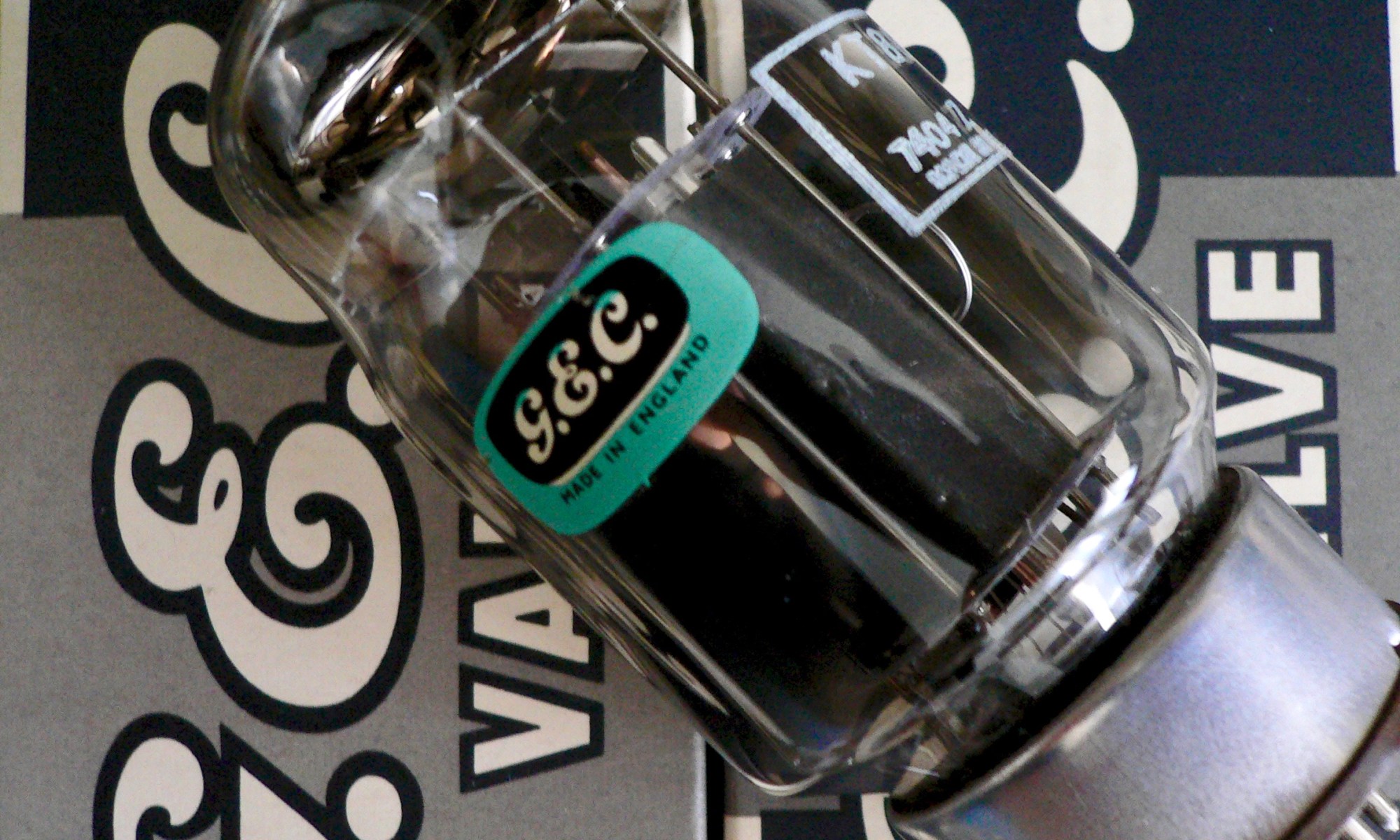
We will discuss here the original vintage GEC KT88 not any of the reissues made by the Russian company New Sensor and labeled with the brand name Genalex Gold Lion nor countless Chinese made copies. The subject of this essay will be the vintage legend made in the period from the end of the 50ties till the end of the 70ties (last century).
The KT88 Situation today:

If we have a look at the countless offerings of KT88 tubes today we have to determine, that none of the actual offerings are real KT88!!!!! – Most of the tubes we are able to buy today are in reality modified 6550 derivates. That is also one of the reasons, why amplifier constructions which are based on the original GEC KT88 will blow such tubes and / or why the operating time of one set of brand new tubes is ridiculously low. If you want to drive your legendary Air Tight ATM2 with modern derivates of the original design, you will face a catastrophic situation: Some sets of brand new tubes survive less than half a year – then one of them dies with heater defects or you face cherry red anode plates wich you have to react to with strictly conservative bias figures to save the tubes and also the amplifier and its output transformers.
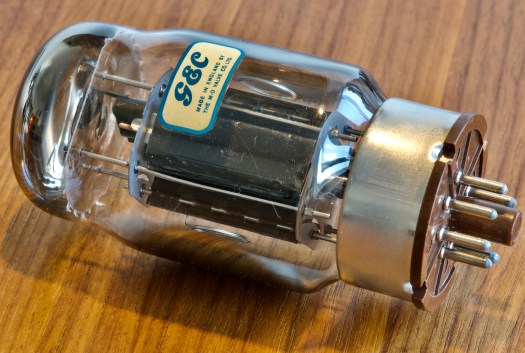
With the modern Mc75 or MC275 from Mcintosh you face a different situation – Mcintosh changed the factory installed tubes years ago to 6550 types – and if you plan to use modern KT88 you might be surprised that the sound characteristic does not change accordingly. There are only very small sound differences we are able to detect. If you ever had a chance to compare one of the best vintage 6550 – the Tung Sol black plates to original GEC KT88 the difference will be jaw dropping! The big advantage of the more modern designed Mcintosh amplifiers is the presence of security circuits which shut down the whole amplifier to save the damn expensive thing. To prove the actual situation, you might be aware of a complete design change in the Air Tight ATM2 NEW, which was released at the beginning of 2020 to address the problem of the actual KT88 situation. Air Tight changed the whole circuit to prepare the classic design to be able to function with what is available today…..
The Sound difference:

Lets say you own a Mcintosh MC275 and some nice audiophile fellow would lend you a quad of original GEC KT88 to compare them against the Gold Lion reissues from New Sensor available today, you might be questioning the sanity of your hearing ability…. The first thing you will detect is a complete different treble presentation between both tubes. The Gold Lion reissue will sound closed in and at the same time aggressive and harsh in the treble and upper presence spectrum. The original GEC KT88 produces a sort of airy treble resolution with a silky smooth gesture the reissue cannot match – it is not even close. Some tube retailer companies will tell you that the process of cyrogenic treatment would solve the poor treble reproduction character of the new design – but that is in my opinion barely noticeable. The New Sensor tubes upper mid spectrum does not feature any agility – the performance is blunt and graceless. The vintage originals are very, very agile and give you so much more texture and a 3D sensation, that you won’t believe the performance difference. These attributes ensure that the reproduction of a grand piano or a violin with all their complex harmonic structures will remain. In the broad midtone section of the spectrum the original GEC KT88 sounds completely unforced and liquid with such an enormous amount of naturalness the reissue cannot match – the difference is not subtile it is dramatic. The bass register of the old originals are full of authority and speed – in comparison the modern construction sounds slow and sluggish with a sort of roll off near 30hz. With all that said the most dramatic shortcomings of the reissue Genalex is the spatial experience. The sound does not detach from the loudspeaker membranes – it does not flood the room, it does not put the listener in front of a virtual stage….The difference is like comparing 70mm cinemascope film material to a VHS video cassette.
The original GEC KT88 shares nearly the same nimbus as the legendary Western Electric 300b – till today no new tube construction can replace the original design.
Availability of the famous GEC KT88 – how to detect the legend:
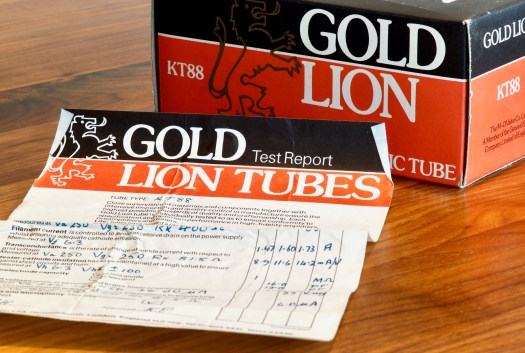
In todays used market the different types / labeled GEC tubes have almost vanished from circulation. Accordingly the used price raised in the last 10 years to a degree were people outside the hard core tube scene will think we all have lost grip!!!! But the biggest problem is to find a good quad of those tubes. Under these circumstances it might be interesting how to determine the quality of a used offer on ebay. Heavily used GEC KT88 tubes are easily identifiable by small brown getter flashes, where there once was a shiny silver getter flash. Keep in mind, the most common original KT88 had 3 getters – two at the side and one on top. Later – at the end of the production there was also a 4 getter version with a 2 top getter construction, which used a completely different plate coating. Instead of the matte greyish black ugly plates of the classic original tube, these versions (also available with 3 getters) share a bluish metallic grey coating on their plates. It is not clear until today if these last generation of classic KT88 were made in Great Britain – or if the MOV (Marconi Osram Valve Company), the maker of the legend, outsourced the production to China. All these last generation shiny plate KT88 are labeled “Gold Lion” and share a small print of a stylised lion on their glass surface which is executed in a yellow goldish colour. So the first thing you have to watch out for is the coating of the plates – because the less sought after shiny plate KT88 are today as expensive as the much better original ones. If we analyse this last version of the vintage KT88 tube strictly, we can speak of the first reissue in existence. The boxes of those tubes are mostly orange and black coloured with the Gold Lion imprint and most of the tubes from this batch normally share black tube bases (under the aluminium collar) instead of the brownish colour of the true classic.

Much higher in demand and also better sounding are the older tubes which we can distinguish from the last generation by looking at the plate coatings. There are more differences – but the coating is easy to detect and therefor a good reference point. The lables which you will find on the old originals may differ – the MOV company made their famous KT88 also for other companies as for example Mullard which are rarely seen today. Mullard itself never made a KT66 or KT88 on their own! With the MOV companies different tube labeling, we face a very complicated branding system, which might be confusing.
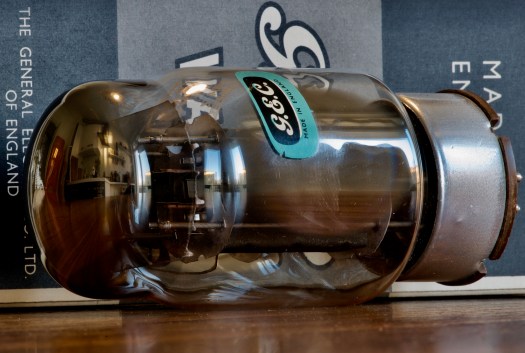
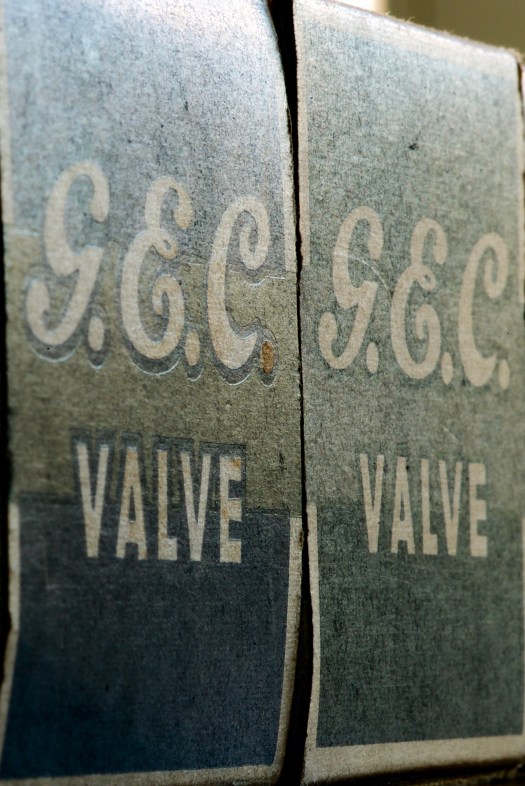
Nearly all exported tubes share a label design which is mostly executed with the beautiful Genalex Gold Lion design. These tubes served as a model for the New Senor reissues. Those tubes came in fancy boxes coloured in red and printed in gold with the name “Gold Lion”. Inside you will find, if you are lucky and have an unopened original in front of you, a sort of plastic bag in which the tube was shrink wrapped together with a shock absorber construction directly derived from the NASA Apollo Programm;-))) The imprints on the glass show a big gold lettering and the famous stylised lion, furthermore the aluminium collar wrapped around the tube base is designed with red Genalex stickers. Another typical US brand of the British original was Gold Monarch – the boxes are as fancy as the Gold Lion ones – the lettering is nearly equal und the tubes are also very, very beautiful. The European customers did not get that fancy outfit (keep in mind – it was always the exact same tube!!!!!) – European GEC KT88 share normally the turquoise coloured GEC label which changed over the long period of the production. Later types have a modification in the label design and colour – now it is printed in a pastel yellowish colour – but also marked with the GEC lettering. There are also versions built for military applications which normally have no white KT88 lettering on the glass surface, instead these specimen used the military designation CV5220. All genuine MOV tubes share an additional white coloured rectangular stamp on the glass body which shows the date code and the letter Z, which is the indication of the Hammersmith factory in England, where all the legendary tubes were made. Your goal is to pic a quad with nearly matching date codes and good readings for transconductance and mutual conductance with good getter flash and no or only slightly brown discolouration. And yes – it is like winning the lottery. A brand new quad of these scarce tubes in original boxes is like meeting your dream woman – and it is nearly as expensive…;-)))
The different versions:
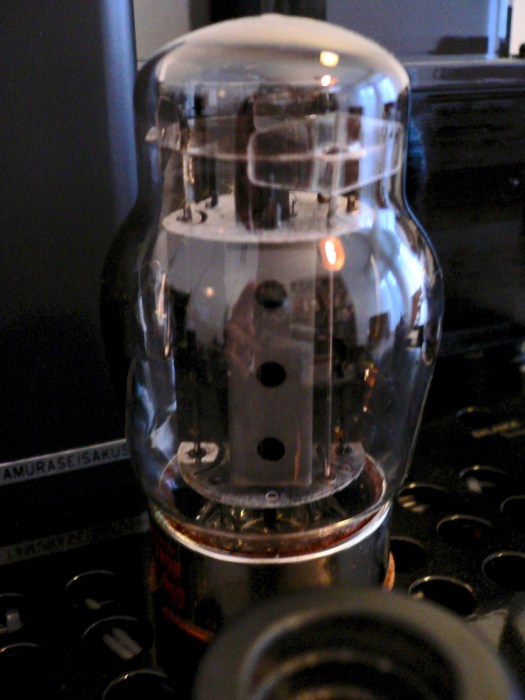
The race between the big tube suppliers to reach more efficiency and output power, pushed the companies to increasingly complex constructions. In the USA the 6L6 GC got it’s big brother with the 6550 and the British tube industry must answer to that offer from Tung Sol and their famous black plates 6550. The MOV company designed the kinkless tetrode (thats why the tube type is named KT XX) – the much stronger stablemate of their KT66 design, which was used in the Quad II amplifiers to very good effect (to name just one example). MOV also designed a substitute for the widely used EL 34 penthode from Philips / Mullard which was protected by patent. They modified their kinkless tetrode deign to built their legendary KT 77 design, which is a drop in replacement for any EL 34 tube – today more rare than everything else from the MOV company! With the KT88 the British manufacturer decided to design a tube specially made for audio applications – in this regard this tube was a big exception, because most tube designs were driven by the defence industry. When Mcintosh designed the MC275 and also the MC75 monoblocks they decided after some intense testing to use the new KT88 instead of the American made Tung Sol 6550, which was a kind of scandal in those years. The typical vintage Mcintosh MC 275 tube setup featured Telefunken ECC83, ECC82 and ECC81, a RCA 12BH7 as a driver stage (which was skipped with all modern MC275 / 75 designs) and four Genalex Gold Lion Tubes….this tube setup would cost in todays market nearly the same as a vintage, unrestored MAC would diminish your wallet.
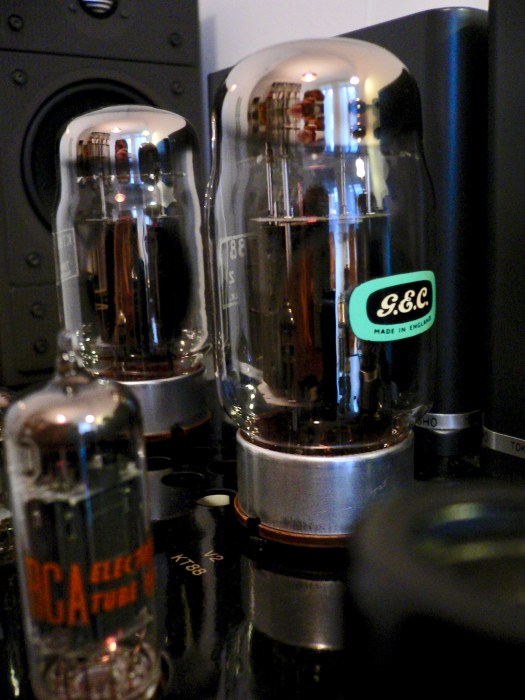
The first version of the MOV companies KT88 design shared nearly the same form factor as the American Tung Sol 6550 – both used a sort of Coke bottle shaped glass body. This version had only one top getter and disappeared completely from the market. The second version already showed the typical KT88 glass body design – and also had only one top getter. These tubes are very, very rare today but sometimes you may find them on ebay USA. There are some audiophiles who claim – this is the holy shit….I mean – this is the best of all KT88 tube types – lacking the experience, I can not confirm that. The next version (3) featured a three getter construction – one on top and two at the sides – this is the most “common” type. If we want to be precise – we can divide this type three in two sub types – but that is maybe too complicated for the first basic explanations regarding this tube type. Type four is the shiny plate model with a three getter construction, I already mentioned above – and type five shares the same construction with the same new plate coating but features a four getter sections.
Is it worth it???
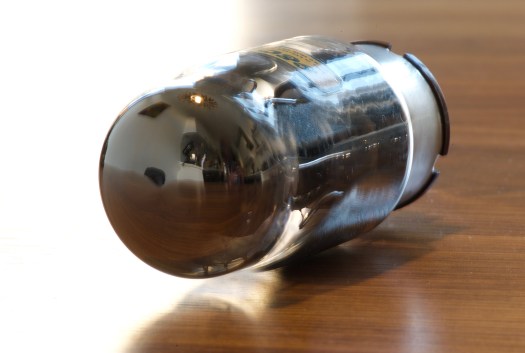
Let me put it this way – if I had no original black plates GEC KT88 – I would sell the amplifier in favour of a nice Lavardin transistor amp or a tube design which uses different types of power tubes which are not as rare (NOS – new old stock) as those legendary MOV tubes. A good substitute would be a 6L6 GC design, because today it is still possible to get a good quad of General Electric grey plates or RCA black plates – which are also far, far ahead of ANY new design (please refer to my essay about the 6L6 GC tube on this blog). The difference in sound culture is so immense, that you cannot ignore this unbelievable quality from the past. None of the actual offerings comes close – even very very expensive modern tubes like the EAT KT88 cannot match the sound of the original MOV design from the sixties. If you now need some sedatives, because you searched for GEC KT88 on ebay and saw the price tags – I am with you….BUT…keep in mind – a new quad of New Sensors Gold Lion will not even come close to the sound of the vintage original – and it will need replacement after 2 years if it survived the first two or three weeks after the initial installation. The vintage GEC KT88 will serve you with its unmatched delicate and complex sound for more than 8 years….which relativises the steep price tag in our days. But do not buy vintage scrap – one of the most important aspects is to use good and nearly new or really new tubes – it is not worth it to buy a tube which is at the end of its lifespan for some bucks less . Tubes – also vintage quality ones – are an aging species – and old heavy used power tubes cannot deliver what they once used to be.
My little story:
5 years ago I visited Japan with my wife. During this trip we spent a couple of days in Tokyo – and you already know what will follow….I begged my wife to spend half a day in Akihabara (electric city) a district of Tokyo where all the vintage tube stores and HiFi dealers are located. After some hours of investigating where I could hunt some nice vintage tubes we came to a strange sort of electro – market, where zillions of little market stalls with loads of electronic components were located. After tons of wire, resistors, capacitors and transistors my eyes spotted at the end of one of the lanes an old man surrounded with vintage tube boxes…. You might guess wat followed:
Me: “Do you have GEC KT88?”
Dealer: “Yes of course”….
Me – breathing harder – “I mean real GEC KT88….”
Dealer: “Yes – the old British quality stuff….”
Me breathing even harder – “Can I see them?” – expecting a pair or maybe some non matched singles….
The man behind the small counter grabbed into one of the drawers and guess what…he placed 3 matched quads of brand new GEC KT88 on the table – all with measurement protocols included…..each for a reasonable price. I bought a very nice quad and stored it securely in my camera bag. My biggest concern was the airport security – imagine 4 strange looking glass tubes with a lot of wire and even more strangely looking metal parts – and all that after 9/11 – but the Japanese airport people x rayed my bag and did not ask a single question….
Maybe it is a sort of fashion in Japan to carry vintage electron tubes in camera bags – maybe we strange audiophiles are well known clients for those security guys at Tokyo airport – who knows…..
Happy hunting
E. Strauss

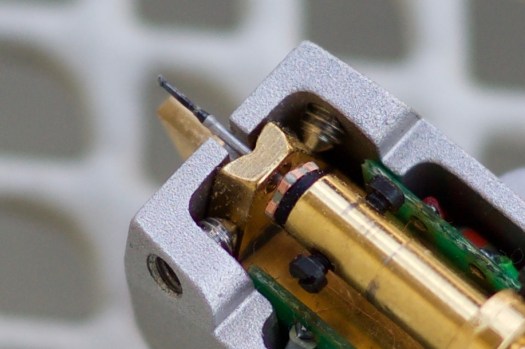
 EMT was one of the leading suppliers for the broadcast industry. The legendary indler wheel truntables EMT 927 and 930 come to mind, as also the famous 997 tonearm or some of the best CD players money can buy. The company was founded in 1940 by Wilhelm Franz as Elektro Messtechnik Wilhelm Franz Kg residing in Mahlberg near Lahr in the German Black Forrest region. Since 2016 the company is now part of EMT International GmbH, which is located in Switzerland.The EMT JSD5´s origin dates back to the famous EMT TSD 15 cart, which was one of the most used pick up systems within the broadcast scene during many decades.






 Medialux